Technological advancement is going on at unprecedented speed in the year 2026. Everything from new products to new technological innovations comes every couple of months, which makes life better for you. If you feel that technology is becoming more difficult to cope with, then rest assured, you are not the only one.
What is important to realize here is that it does not require you to become a technologically advanced individual to understand what is going on. What you require is an explanation of things that will make things easier for you.
This is precisely what we are going to give you through our guide, where we will simplify all the technology trends for you.
Let us dive in.
Why Technology Trends Matter in 2026
Knowing technology trends is no longer just something that concerns programmers and large corporations. By the year 2026, they impact everyone, determining future employment opportunities, business strategies, education methods, as well as ways of social interaction.
Those who will be able to foresee such trends early will have a distinct advantage in making the right decisions and choosing lucrative business areas.
Following are the key technology trends that determine the year of 2026.
Agentic AI – AI That Actually Does Things For You
You have probably worked with ChatGPT and other AI chatbots, which allow you to ask questions and receive answers. In 2026, however, there has been tremendous progress made with AI technologies due to what is called agentic AI.

An agentic AI is not simply a technology that gives you the desired information or helps you make an informed decision. Instead, such a system will do certain actions for you without you guiding it every single step of the way.
In other words, unlike when you asked ChatGPT “how do I organize a trip to Japan?” and received a list of ideas for your travel itinerary, an agentic AI would book flights for you, find places to stay at, make a plan for you to follow, and even give you an itinerary of activities to do during your holiday in Japan.
The shift from AI being a passive technology to being a powerful agent is perhaps one of the biggest breakthroughs made in terms of modern technology development. Companies already use such technology for providing customer support, managing workflows, processing huge amounts of information, as well as organizing their operations.
Thus, one of the main themes of 2026 can be said to be agentic AI – intelligent systems able to make their own decisions and carry out multi-step processes independently.
Conclusion: Things like preparing for business meetings and planning your trip to another country, analyzing large chunks of information or completing other tasks taking hours to finish could be done in just minutes with the help of these technologies.
Multimodal AI, AI That Sees, Hears, and Understands Everything
Earlier AI models could only handle text. You typed something in, and you got text back. In 2026, the most advanced AI models can process text, images, audio, and video all at the same time.
This is called multimodal AI and it is changing what AI can actually do in the real world.
The most advanced models of 2026 no longer see the world through text alone. Foundational models can now sorta natively make sense of and respond to text images, audio and video all in real time, and you dont really need those separate bolted on modules, like it’s all handled in one place.
Think about what this means practically. A doctor can upload a patient’s scan and medical notes together and get an AI analysis that considers both at once. A retailer can analyze security footage alongside sales data to understand customer behavior. A content creator can describe a video idea in text and get a fully produced script, storyboard, and audio outline back in seconds.
What this means for you: AI tools are becoming way more helpful for creative work, business analysis, education and everyday problem solving , because they can now grasp context in a way that’s more human like not just matching keywords.
Quantum Computing Goes Commercial
Quantum computing has been considered a futuristic technology for years. However, in 2026, it is beginning to move from a futuristic concept into something more realistic.
Conventional computers rely on binary – everything is either a 0 or a 1. Quantum computers utilize quantum bits which can simultaneously be both 0 and 1. The result is computers capable of solving problems which could take classical computers several thousand years in mere minutes.
In 2026, quantum computing is reaching its commercial potential along with efficiency-first artificial intelligence architecture, multi-agent systems, governance frameworks for AI, and specialized application domain models.
What can quantum computers do? To start with, quantum computing can decipher complex encryption schemes, design innovative drug molecules, optimize global transportation networks, and accurately simulate climate phenomena.
At present, the field of quantum computing is dominated by big research, institutions and leading tech companies. In 2026, the industry reaches commercial viability, giving businesses who grasp this technology an edge in the coming years.
For your consideration: While quantum computers will probably remain out of reach for you, their impact in various fields such as cybersecurity, health care, finance, and logistics will eventually reach you.
AI-Powered Automation Is Transforming Every Industry
Automation is not new, as robots were introduced into factories many years ago. However, when it comes to automated systems based on artificial intelligence in 2026, then this type of automation is different since it is more intelligent, fast, affordable and possible even for small companies.
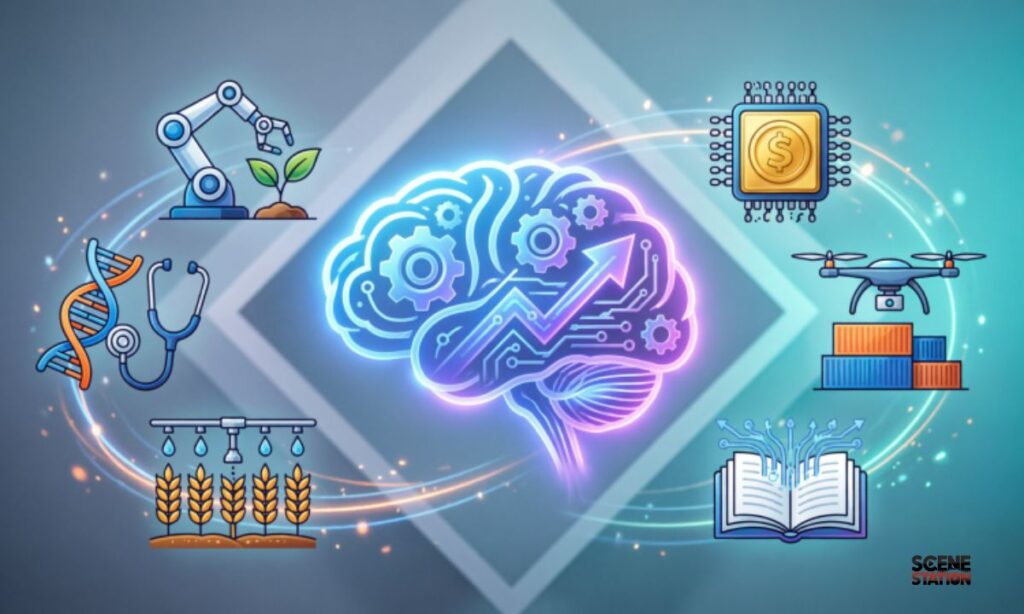
The following jobs which could be executed by skilled workers can now be accomplished using AI-based automation systems:
- Content writing and editing
- Customer service queries
- Financial analysis
- Processing job applications
- Running social media accounts
- Code generation for software developers
In 2026, AI transforms whole business value chain processes by improving prediction, personalization, automation and decision making capabilities. AI-based systems work constantly and without getting tired. In addition, various industries including finance, healthcare, retail, and manufacturing adopt AI at large scale in order to save money and provide improved customer experience.
Conclusions: If your profession is somehow connected to monotonous tasks, then AI automation would revolutionize this process. On the other hand, it gives opportunities to humans for doing something else.
Efficient AI Doing More With Less Power
In previous years, the mantra of AI was that bigger meant better. The larger the AI model with the higher number of parameters, the smarter the model became. In 2026, however, things will be quite different.
It will be all about efficient AI, where smaller but much faster AI models will provide incredible performance with reduced computing resource needs.
According to scientists from IBM, the class frontier versus efficient model classes will dominate in 2026. Among colossal AI models with millions of parameters, hardware-conscious AI models trained on affordable accelerators will emerge.
Why is this so significant? Efficient AI models do not require special computer hardware to work. They can easily run on regular laptops, smartphones, and other portable devices. No need for a high-speed internet connection or costly hardware anymore. You will have access to any AI algorithm you want right away!
Besides, efficient AI is environmentally friendly since the training of colossal AI models consumes too much power. Thus, efficient AI minimizes the carbon footprint.
So, what does it mean for you? Inefficient hardware cannot stop your smartphone from becoming even more advanced in the next few years.
Cybersecurity Gets Smarter With AI
Technology improves, and the dangers posed to technology improve with it. Cyberattacks are more complex and intricate now compared to even just a few years ago. By 2026, hackers will have used AI technologies to attack their targets at a scale and speed unmatched by human security analysts.
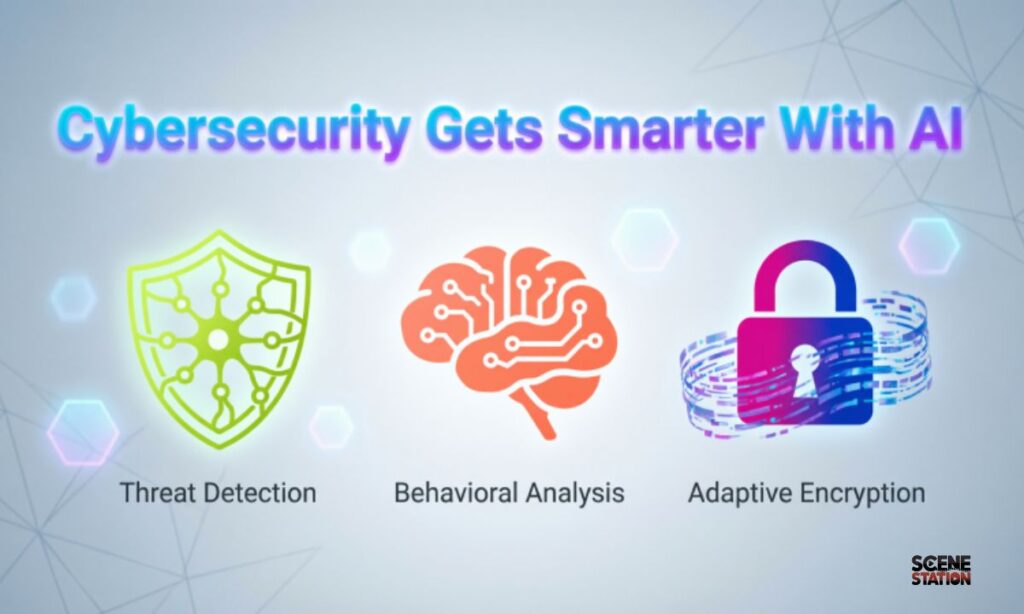
The solution to this problem? AI security technologies.
With AI security technologies, the system can recognize anomalous activity in real time and take necessary steps in order to defend itself and its user before any threat is posed to the system. It can also respond instantly, within milliseconds, to any malicious activities.
In addition to this, governments and other institutions have invested a lot of money on making data protection regulations stricter. In other words, being protected and being compliant with the law is no longer an option but a requirement.
Conclusion: As such, better AI-powered security solutions have emerged to protect even ordinary individuals from cyberthreats.
Edge Computing Processing Data a bit Closer to Where It Is Created
Most everyone understands how cloud computing stores and manipulates data from a distant server using the Internet. Edge computing is the opposite concept, where data is processed at its point of origin either at the device itself or via a local server rather than being sent to some distant server.
So why is this relevant to 2026? Simply put, time matters. If a self-driving car needs to make an instantaneous decision, there is no way for the car to send information to the cloud server and get a response back. The processing needs to be done immediately and locally.
This holds true for other applications such as the factory floor, medical applications, language translation programs, and home automation equipment. In all these instances, edge computing helps provide faster performance.
So what does this mean for you? All those apps and devices that you use regularly will become even faster because edge computing is becoming common, particularly in places with slow Internet access.
Generative AI in the Workplace Is Now Standard
A year ago, companies were experimenting with generative AI. In 2026, it has moved from experiment to standard practice in most modern workplaces. Writers use AI to draft and edit content. Marketers use it to generate campaign ideas.
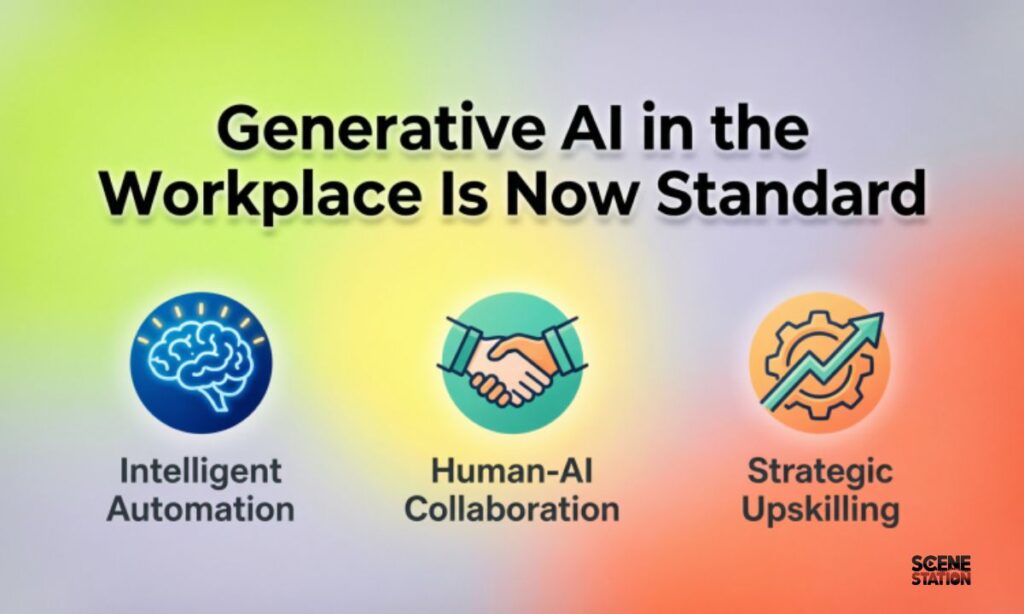
Developers use it to write and review codes. Designers use it to create visuals and mockups. HR teams use it to screen candidates and write job descriptions. Today, organizations face a new reality: AI is no longer a differentiator, but a baseline expectation for organizations seeking to innovate and compete.
The companies that resisted AI adoption a year ago are now scrambling to catch up. Meanwhile, businesses that embraced AI early are producing more output with smaller teams and moving faster than their competitors. What this means for you: If you are entering the job market or growing a business in 2026, knowing how to work with AI tools is no longer a bonus skill it is expected.
AI in Healthcare Faster Diagnosis, Better Treatment
One of the most exciting and meaningful applications of AI in 2026 is in healthcare. AI is transforming how diseases are detected, how treatments are designed, and how patients are monitored.
AI models can now analyze medical scans and detect early signs of cancer, heart disease, and other conditions with accuracy that matches or exceeds experienced doctors. Drug discovery that once took 10 to 15 years is accelerated to just a few years using AI-powered molecular simulation.
Personalized medicine is also becoming a reality. Instead of one-size-fits-all treatments, AI analyzes a patient’s genetics, lifestyle, and medical history to recommend treatments tailored specifically to them. What this means for you:
Healthcare in 2026 is moving toward earlier detection, more personalized treatment, and better outcomes especially for conditions that were previously difficult to diagnose early.
The Human Side of Tech Skills That AI Cannot Replace
With all of these technological advances, a natural question comes up. What happens to people? What skills will still matter in a world where AI handles so much? The answer is clear. The skills that matter most in 2026 are the ones AI still cannot do well: Critical thinking and problem solving understanding complex, ambiguous situations
- Creativity and original ideas — generating genuinely new concepts
- Emotional intelligence — building real human relationships and trust
- Ethical judgment — making value-based decisions in complex situations.
- Communication — explaining ideas clearly to diverse audiences
- Adaptability — learning new tools and adjusting to change quickly
The future of innovation hinges on whether people act as catalysts for AI or block its potential. Viewing AI as an opportunity to rethink how teams collaborate, learn, and create value together is important. The most successful people in 2026 are not the ones who know the most about technology. They are the ones who know how to work with AI as a partner using it to amplify their own human strengths.
Quick Summary: Top Tech Trends 2026
| Trend | What It Means |
| Agentic AI | AI that completes tasks autonomously |
| Multimodal AI | AI that processes text, audio images, and video |
| Quantum Computing | Solving problems no regular computer can |
| AI Automation | Handling repetitive work across every industry |
| Efficient AI | Smarter models that use less power |
| AI Cybersecurity | AI fighting back against AI-powered threats |
| Edge Computing | Faster processing right where data is created |
| AI in Workplace | Standard tool for productivity in every field |
| AI in Healthcare | Earlier detection and personalized treatment |
| Human Skills | Creativity, empathy, judgment still irreplaceable |
Frequently Asked Questions
What are the top emerging technology trends this year?
The biggest emerging technology trends in 2026 are agentic AI, multimodal AI, quantum computing, AI-powered automation, and efficient AI models.
How is AI changing software development?
AI is transforming software development faster than almost any other field. Tools like GitHub Copilot, Cursor, and similar AI coding assistants can now write, review, and debug entire blocks of code based on a simple description in plain English.
Will humanoid robots really be working alongside humans?
Yes and it is already happening. In April 2026, Siemens and Nvidia tested a humanoid robot on a live factory floor at Siemens’ electronics plant in Germany. The robot performed routine logistics tasks autonomously for more than eight hours and completed over 90% of its assigned work.
How are cybersecurity threats evolving in 2026?
Cybersecurity threats in 2026 are more dangerous than ever because attackers are now using AI to power their attacks. AI enables threat actors to craft more realistic phishing attacks at a greater scale, create deepfakes that impersonate real employees, and generate malware that adapts and evolves to evade detection all with minimal human involvement.
What does the “Year of Truth” mean for AI?
The “Year of Truth” is a phrase being used widely in 2026 to describe a major shift in how businesses and organizations are approaching AI. For the past few years 2023, 2024, and 2025 companies were mostly experimenting with AI, launching pilots, buying tools, and announcing “AI strategies” without always proving real results.
Final Thoughts
Technology in 2026 isn’t just something happening *to* us. It’s more like, we’re all in it. Every app we tap, every business move we’re making, every skill we decide to grow that whole thing gets influenced by tech trends around us and, in return, it also pushes those trends forward. The bright side is, you don’t have to grasp everything about every item on this list. You only need to stay curious, keep learning, and pick one or two areas that feel the most relevant to your life or job, then go deeper there, not just skim it.
The folks who really do well in 2026 are not necessarily the smartest, or the most technical. They’re usually the most adaptable, the ones who lean into change, learn quickly, and figure out ways to turn fresh technology into real value for themselves as well as for others. So, which of these tech trends are you honestly most excited about, or maybe even a bit worried about?
Drop your thoughts in the comments below!
Visit Our More Tech Posts
How to Do Blogger Outreach in 2026 – Complete Step-by-Step Guide
best-ai-tools-2026 – The Only List You Need to Bookmark Right Now
Best Money Making Apps 2026 – 10 Legit Apps That Actually Pay Real Cash
Top Tech Trends 2026 – The Biggest Technology Changes Happening Right Now

Ash Williom has spent years writing puns, wordplay, and internet slang guides for Scenestations.com, with a habit of testing every joke on real friends and family before it makes the list. When not chasing down the perfect one-liner, Ash is usually knee-deep in group chats collecting new material or digging into how internet slang actually spreads across platforms.