Are you sick of sending a dozen emails and getting no response? This happens to everyone. People who attempt blogger outreach often repeat the same mistakes again and again. Either the emails are boring, the choice of the blogs inappropriate, or favors are asked without having established a relationship first.
This guide will show you why blogger outreach is more effective in 2026. For those who know how to conduct blogger outreach correctly, this technique becomes even more effective than ever before. In this guide, you will find every step you need to take to achieve success.
What Is Blogger Outreach and Why Does It Matter
Blogger outreach is the process of connecting with bloggers, website owners, and online content creators to build real relationships that benefit both sides. These relationships can lead to guest posts, backlinks, product reviews, brand mentions, or long-term partnerships.
It is not about spamming strangers with copy-paste messages. It is not about buying links or tricking people into posting your content. It is about genuine connection and offering real value.
In 2026, Google is smarter than ever. It rewards websites that earn links naturally through real relationships. Sites that use automated outreach or fake link schemes are getting penalized at a fast rate. The solution is simple: do outreach like a real human being.
- When you do blogger outreach correctly, you get several important benefits:
- High-quality backlinks that improve your search rankings
- Referral traffic from audiences who actually trust the blogger
- Brand awareness on a new level within your target niche
- Mutually beneficial relationships that yield returns for months or years
- Domain authority grows with time
A smart outreach plan even helps little bloggers. You don’t have to spend lots of money on branding or employ a big team. All you need is a system and patience.
Define Your Goals Before You Start
Before attempting to contact a blogger, it’s important for you to determine why you’re making the contact. It might seem obvious, but many neglect this crucial first step.
Your goals will dictate the rest – the type of bloggers you choose, the offer you extend to them, and even your criteria for judging success.
- Popular outreach objectives include:
- Creating backlinks to help boost SEO rankings
- Guest posting for building up an audience
- Writing product reviews from credible sources
- Seeking out brand partnerships that can last for a while
- Building up your own network of blogs and communities
When you have your aim sorted, jot it down in a single sentence. For example, “I need to get five guest posts on technology blogs that generate actual traffic in two months.” This way, your whole strategy will become a lot clearer.
Find the Right Blogs to Target
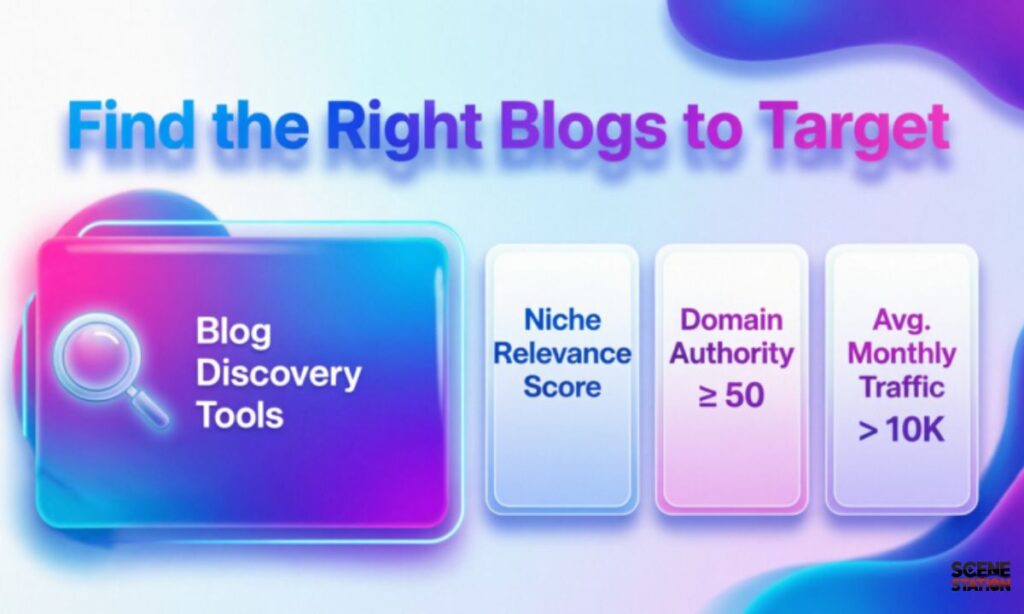
This step is where most outreach campaigns fail. People target random blogs without checking whether those blogs are actually a good fit. Reaching out to the wrong blogs wastes your time and hurts your reputation.
Here is how to find blogs that are actually worth your time:
Look for topical alignment first. The blog should cover topics that are directly related to your niche. A technology blog linking to a cooking website makes no sense. Google knows this too. Make sure the content themes are closely related.
Check for real traffic. A blog with a high domain rating but zero organic traffic is not worth your time. Use free tools like Ubersuggest or check the blog’s social media engagement. Blogs with real audiences are far more valuable than blogs with inflated metrics.
Look at recent activity. A blog that has not published anything in six months is probably not active. You want to work with bloggers who are regularly creating content and staying engaged with their readers.
Read a few articles. Before reaching out, spend five minutes reading two or three posts. This helps you understand the tone, the audience, and what kinds of content they accept. Bloggers can tell immediately when you have never read their work.
Check if they accept guest posts. Some blogs have a dedicated “Write for Us” page. Others are more informal about it. Look for signs that they collaborate with outside writers before spending time on a pitch.
Good places to find blogs in your niche include Google searches like “your niche + write for us,” checking where your competitors are getting backlinks, and using content tools to find popular publications in your space.
Warm Up Before You Pitch
This is the step that separates average outreach from great outreach. Most people jump straight into the pitch email without any prior contact. That feels cold and transactional.
Warming up means getting on a blogger’s radar before you ever send a pitch. This small step can dramatically improve your response rate.
Here is how to warm up effectively:
Follow them on social media. This is the easiest first step. Follow the blogger on Twitter, LinkedIn, or Instagram. You do not need to say anything yet. Just make your name visible.
Leave a genuinely helpful comment. When they publish a new post, leave a thoughtful comment that adds something to the conversation. Do not just write “Great post!” Write something specific about the article that shows you actually read it.
Share their content with your honest opinion. If you share their article on social media and mention something you found valuable, that gets noticed. Most bloggers check who is sharing their work.
Engage with their newsletter. If they have an email newsletter, subscribe and reply to one of their emails with a genuine response. This is a surprisingly powerful way to build a connection.
You do not need to do all of these things. Even one or two small interactions before your pitch can make a real difference. When you finally reach out, you are not a complete stranger.
Write an Outreach Email That Gets Replies
This is the most important part of the entire process. A great list of blogs means nothing if your email gets ignored.
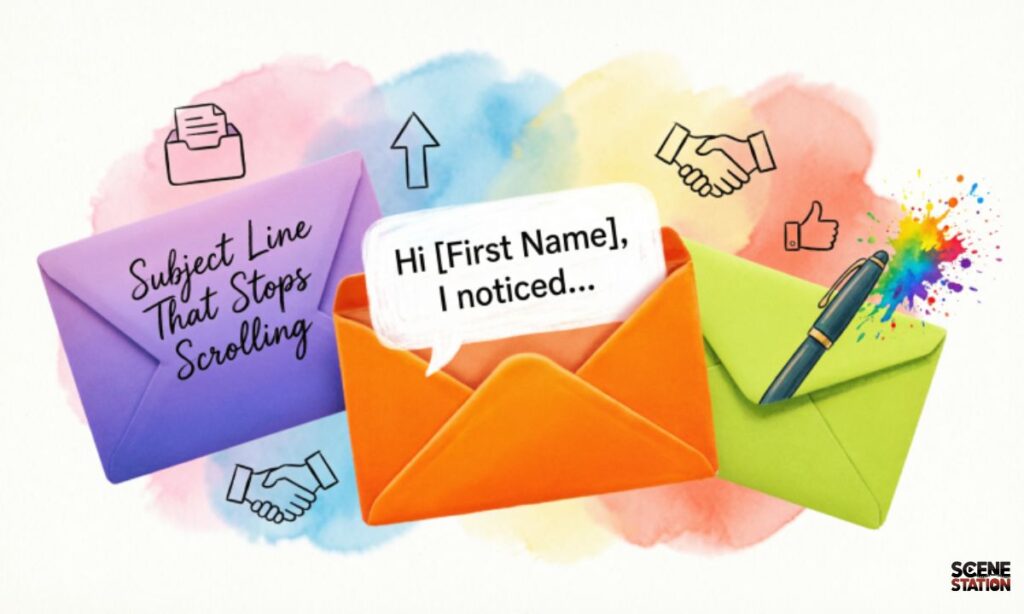
Here is what makes a strong outreach email in 2026:
Keep it short. Long emails rarely get read fully. Your entire email should be readable in under 60 seconds. Get to the point quickly.
Personalize every single email. Generic templates get deleted instantly. Mention a specific article you read on their blog. Reference something about their audience or content style. Show that you actually know who they are.
Lead with what you are offering, not what you want. Most bad outreach emails start with “I want” or “Can you.” Great outreach emails start with the value you bring to their readers.
Have one clear ask. Do not ask for three things in one email. One request, explained clearly, is far easier to say yes to.
Here is a simple structure that works well:
Subject line: Quick idea for [Blog Name]
Hi [First Name],
I came across your article on [specific topic] and really liked how you explained [specific point]. It was exactly the kind of content I share with my own audience.
I write about [your topic] and I had an idea for a post that would be a great fit for your readers — [short one-line description of your pitch].
Would you be open to taking a look? Happy to share a full outline if that helps.
Thanks for your time, [Your Name]
That is it. Short, specific, personal, and easy to reply to. You are not asking for a big commitment upfront. You are just opening a door.
Follow Up the Right Way
Most replies come from follow-up emails. If you send one email and wait forever, you will miss a lot of opportunities. Many bloggers are simply busy and your first email got buried.
That said, there is a right way and a wrong way to follow up.
Send your first follow-up about five to seven days after the original email. Keep it very short and friendly. Something like: “Hey, just wanted to bump this up in case it got buried. Happy to answer any questions.”
One follow-up is professional. Two can work in some cases. Three or more starts to feel like harassment. If someone has not replied after two follow-ups, move on. Do not burn bridges by being pushy.
Never follow up aggressively or with a frustrated tone. The blogging community is smaller than you think. People remember who treated them with respect and who did not.
Create Content Worth Sharing
Here is a hard truth that most outreach guides skip: if your content is not actually good, none of these steps matter. Bloggers get pitched constantly. The ones who say yes are saying yes because the content will genuinely help their readers.

Before you launch an outreach campaign, ask yourself honestly: is what I am offering actually valuable? Would readers learn something useful or be genuinely entertained?
High-quality outreach content has a few things in common:
- It fits naturally with the blog’s existing topics and tone
- It offers a fresh angle on something the audience already cares about
- It is well-written, easy to read, and properly researched
- It includes useful examples, data, or practical tips
- It does not read like a sales pitch for your product or brand
If your content idea is thin or overly promotional, fix it before you pitch. A strong content idea will make every other step of outreach much easier.
Build Long-Term Relationships, Not One-Off Links
The biggest mistake in blogger outreach is treating it as a one-time transaction. You get the link, you disappear, and you never interact with that blogger again. This approach burns bridges and misses the real value of outreach.
The best outreach practitioners think in terms of relationships, not individual links. When you build a genuine connection with a blogger, you gain a long-term partner who may mention you again, share your future content, or introduce you to other bloggers in their network.
After a collaboration, do these things:
- Share the published post with your own audience
- Leave a genuine comment on the published article
- Stay in touch occasionally by engaging with their new content
- Look for ways to send value their way without asking for anything in return
Over time, these small efforts add up to a real network of trusted connections. That network becomes one of your most valuable business assets.
Common Blogger Outreach Mistakes to Avoid
Even experienced marketers make these mistakes. Knowing them in advance can save you a lot of wasted time.
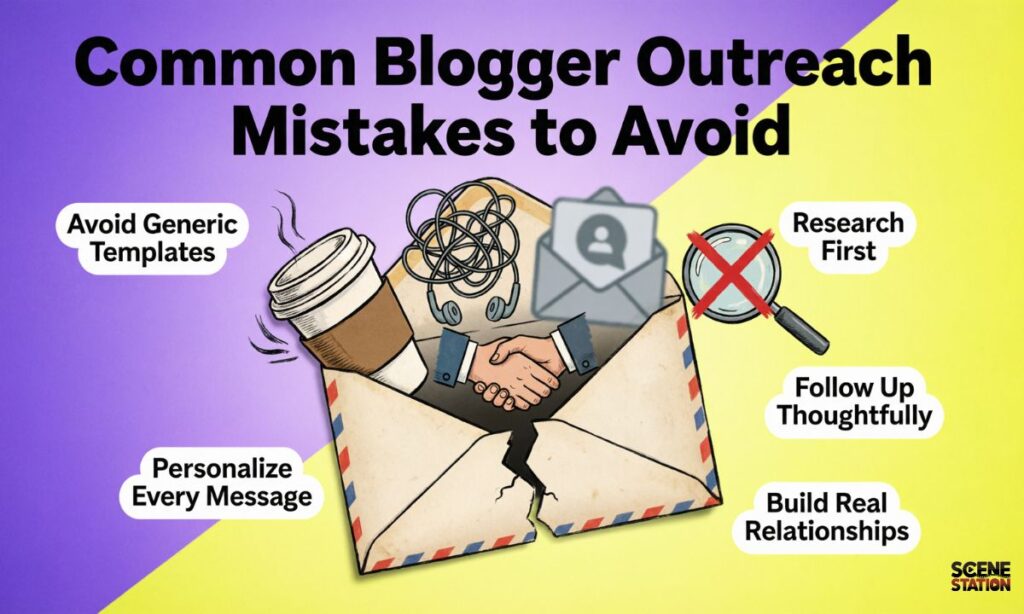
Sending mass emails with zero personalization. Bloggers can spot a template from a mile away. These emails go straight to the trash.
Pitching topics that have nothing to do with the blog’s audience. If you pitch a fitness idea to a tech blog, you show that you have never actually read their content.
Making the entire email about yourself. Nobody cares about your credentials until they trust you. Start with their audience, not your resume.
Following up too quickly. Sending three emails in four days feels desperate and annoying. Give people time to respond.
Ignoring the blog’s guest post guidelines. Many blogs have specific instructions for submissions. Ignoring them is an easy way to get rejected immediately.
Giving up after one or two rejections. Outreach has a low response rate by nature. Even great campaigns typically see only 20 to 30 percent responses. Keep going and keep improving.
Best Free Tools for Blogger Outreach in 2026
You do not need expensive software to run a successful outreach campaign. These free or affordable tools can help you stay organized and find better targets:
Google Search — Still the best way to find blogs in your niche. Use search phrases like “your topic + write for us” or “your topic + guest post.”
Hunter.io — Helps you find email addresses associated with a website. Has a free tier that works well for small campaigns.
Ubersuggest — Free tool for checking a blog’s traffic and seeing what keywords they rank for.
Google Sheets — Great for tracking your outreach targets, email status, follow-up dates, and results.
BuzzSumo — Useful for finding popular content in your niche and identifying which bloggers are sharing it.
Ahrefs Free Tools — The free version gives you basic backlink and traffic data for any URL.
Starting simple with just a spreadsheet and your email account is perfectly fine. What matters is consistency and quality, not fancy tools.
How to Measure Your Outreach Success
Tracking your results helps you improve over time. These are the main numbers to watch:
- Response rate — How many bloggers replied to your outreach emails. A rate above 15 percent is solid. Above 30 percent means your personalization is excellent.
- Placement rate — How many outreach emails turned into an actual published post or mention.
- Traffic from referrals — Check your analytics to see how much traffic is coming from blogs where you got placed.
- Ranking changes — Watch whether your target pages move up in search rankings after earning new backlinks.
Review these numbers every month and look for patterns. Maybe emails sent on Tuesday get more replies. Maybe certain blog types respond better to shorter pitches. These small insights help you improve your process continuously.
FAQs
How many outreach emails should I send per day?
Starting with 10 to 20 highly personalized emails per day is a good range for most people. Quality matters far more than volume. Sending 500 generic emails gets worse results than sending 20 carefully crafted ones. As you build a rhythm and improve your templates, you can scale up slowly.
What is the average response rate for blogger outreach?
Most outreach campaigns see a response rate between 5 and 15 percent on average. However, well-personalized campaigns targeting well-matched blogs can reach 25 to 30 percent or higher. If your response rate is below 5 percent, revisit your email copy and your blog targeting.
Is blogger outreach still worth doing in 2026?
Yes, absolutely. Backlinks from trusted, relevant websites remain one of the most powerful ranking signals in Google’s algorithm. While the tactics have evolved, the core principle has not changed. Real relationships with real publishers produce real results. It is one of the most reliable long-term SEO strategies available.
Should I offer to pay bloggers for guest posts?
Paying for links is against Google’s guidelines and can result in penalties for both parties. However, it is perfectly fine to offer a free product for honest review, provide genuinely useful content for free, or compensate a blogger for their editorial time in other ways. Focus on value exchange rather than direct payment for links.
How long does it take to see results from blogger outreach?
Blogger outreach is a long-term strategy. You might start seeing new backlinks within a few weeks of your first placements. Meaningful ranking improvements typically take one to three months to show up, depending on your niche and how competitive your target keywords are. Patience is part of the process. Consistent outreach over several months builds compounding results.
Final Thoughts
Blogger outreach in 2026 is not about tricks or shortcuts. It is about treating other bloggers like real people, offering genuine value, and building relationships that last longer than a single backlink.
The process is simple: find the right blogs, warm up before pitching, write short and personal emails, follow up politely, create content worth reading, and nurture your connections over time.
If you follow these steps consistently, you will see results. Your domain authority will grow, your traffic will increase, and you will build a network of trusted partners who can help you grow for years to come.
Visit Our Other Posts About Tech
How to Do Blogger Outreach in 2026 – Complete Step-by-Step Guide
best-ai-tools-2026 – The Only List You Need to Bookmark Right Now
Best Money Making Apps 2026 – 10 Legit Apps That Actually Pay Real Cash
Top Tech Trends 2026 – The Biggest Technology Changes Happening Right Now

Ash Williom has spent years writing puns, wordplay, and internet slang guides for Scenestations.com, with a habit of testing every joke on real friends and family before it makes the list. When not chasing down the perfect one-liner, Ash is usually knee-deep in group chats collecting new material or digging into how internet slang actually spreads across platforms.