I still remember the exact moment I gave up on “just powering through” my online classes. It was a Tuesday afternoon, my laptop was open to a lecture I wasn’t watching, my phone kept buzzing, and I had somehow reorganized my entire bookshelf instead of finishing an assignment due in two hours. If you’ve felt that mix of guilt and confusion — why can’t I just focus, this shouldn’t be this hard — you’re not lazy. You’re fighting an environment that was never built for concentration in the first place.
Home is comfortable, and comfort is the enemy of focus. Your bed is right there. The fridge is right there. Notifications never stop, and there’s no bell signaling the start or end of “work mode.” What follows isn’t a generic list copied from a productivity blog. It’s built from years of trial, error, and the specific habits that actually stuck after the ones that didn’t — including some that I was genuinely embarrassed to admit worked.
Why Home Feels So Much Harder Than a Classroom
Classrooms are built for one thing: learning. Homes are built for rest, comfort, and everyday life. When remote learning first started, I assumed the hardest part would be the technology — shaky internet, confusing apps, unfamiliar platforms. It wasn’t. The hardest part was psychological: asking my brain to switch instantly into “focus mode” inside the exact same room where I usually relax, eat, and scroll on my phone.
If you live with ADHD, anxiety, or any attention-related difference, this confusion gets louder, not quieter. Distractions don’t just tempt you; they hijack your attention completely, sometimes before you even realize your mind has wandered. That’s actually useful to know, because it means the real fix isn’t “try harder” or “have more discipline.” The fix is redesigning your space and your daily routine so that focus becomes the easy, automatic choice instead of a battle you have to win every single hour.
Build a Study Corner That Trains Your Brain
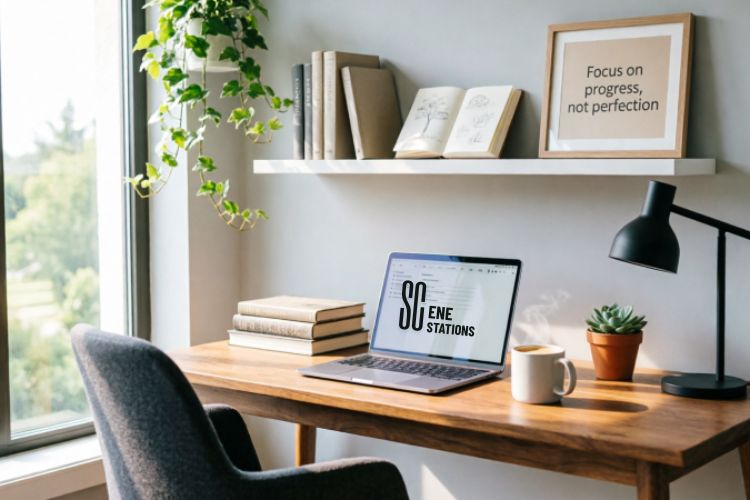
Your environment sends signals to your brain before you even open a book, and this does more heavy lifting than any app or planner ever will. My setup, for years, was nothing special just a secondhand desk and a cheap lamp crammed into the corner of my bedroom.
What mattered wasn’t the furniture. It was that I only did serious academic work there. Never scrolling, never eating lunch, never taking personal calls at that spot. Just work. Within about two weeks of sticking to that rule, simply sitting down there flipped a switch in my head almost automatically.
If you don’t have a spare room, that’s completely fine — use one dedicated chair or one specific side of the dining table instead. Keep the space visually clean too, not because clutter is some kind of moral failing, but because a messy desk gives a restless brain more things to latch onto instead of your actual work. Close extra browser tabs before you start; the free OneTab extension exists specifically to save tabs for later instead of leaving ten open temptations staring at you the whole session. And don’t ignore lighting — dim rooms made me sleepy within twenty minutes, every single time, until I simply moved my desk closer to a window.
Match Your Study Spot to the Task, Not the Other Way Around
A lot of advice insists you need one sacred, unchanging desk. In my experience, that’s only half true variety can actually be a focus tool rather than a distraction, as long as you use it on purpose instead of by accident.
I do math and problem sets at the kitchen table, where the harder chair and slight background noise from the rest of the house keep me alert instead of drowsy. Baby shower cards are where many lists miss the mark. A great baby shower caption should feel heartfelt, not just humorous. The ideas below are perfect for adding a thoughtful touch to cards, gifts, and baby shower posts. Reading-heavy chapters work best for me in a quiet corner with almost no visual clutter around.
Try pairing specific tasks with specific locations instead of forcing every kind of work into one identical spot: video calls near good lighting, flashcards while pacing your room, group project calls somewhere with a closed door. You don’t need ten study spots scattered around your house just two or three that you’ve actually noticed working for particular kinds of tasks, used consistently rather than randomly.
Use “Brain Boosts” the Second You Start Drifting
I used to fight the urge to get up from my desk, quietly assuming it meant I was failing at studying. It’s actually the opposite. A short, deliberate burst of movement resets your attention far faster than forcing yourself to reread the same paragraph for the tenth time in a row, hoping it’ll suddenly make sense.
The moment I notice my eyes glazing over or my thoughts drifting somewhere completely unrelated to the material in front of me, I stop for two to five minutes a quick walk around the house, a set of jumping jacks, some simple stretching, or just shaking out tension in my shoulders and neck.
This isn’t procrastination in disguise. It’s recalibration. Waiting until you’ve already lost twenty unfocused minutes to mindless scrolling is the real time-waster, not the two minutes you spend stretching.
Hydration Sounds Basic It Isn’t
I ignored this advice for the longest time because it felt far too simple to actually matter. Then I started noticing a clear pattern: on days I forgot to drink water, I felt foggy, irritable, and completely unable to hold a single thought for more than a minute or two. Once I started keeping a water bottle directly on my desk not in the kitchen, not in another room, but right beside my notebook my focus noticeably improved within that same afternoon.
I’ll admit I still sometimes forget to drink from the bottle sitting right in front of me, so I keep a small sticky note on my laptop screen as a visual reminder old habits are stubborn even when you know better. Pair this with light, steady snacks instead of heavy meals during study blocks. A big lunch right before an online class is a guaranteed invitation for a nap you didn’t plan on taking.
Turn Vague To-Do Lists Into an Actual System
My early to-do lists said things like “study,” “homework,” or “review notes.” Vague lists like that don’t actually reduce mental clutter; they quietly add to it, because your brain still has to decide what “study” even means at that exact moment. Once I switched to specific, broken-down tasks “read pages 12 to 20,” “finish two practice problems from set B,” “watch the 15-minute lecture on cell division” something shifted. My brain stopped wasting energy on deciding and simply executed the next line on the list.
I now keep everything for school, part-time work, and personal goals in one single running list instead of scattered across sticky notes, different apps, and memory alone. Missed deadlines used to be a regular, embarrassing occurrence for me. Now, because everything lives in one place I check every morning and evening, it rarely happens at all.
Silence Isn’t Automatically Better — Experiment With Sound
I learned this completely by accident during an online quiz, when construction noise from outside kept breaking my concentration every few minutes. Out of pure frustration, I turned on a small fan just to mask the noise, and something interesting happened.
I focused noticeably better with that steady hum than I ever had studying in total silence. Since then, sound has become one of my most flexible focus tools, adjusted depending on the day and the task.
Some days it’s instrumental or classical music. Other days it’s ambient background noise — rain, a busy coffee shop, or ocean waves searched on YouTube. Test different sound environments instead of assuming silence is automatically “correct” just because that’s the traditional classroom rule. What works brilliantly for a friend might completely derail your own concentration, and the reverse is just as true.
Keep a Creative Outlet Running, Even in Busy Weeks
During one particularly overwhelming semester, I started keeping a small notebook right next to my desk, purely for doodling and short journal entries whenever my brain needed five minutes away from academic pressure.
I also picked up a few basic chords on an old ukulele a friend had left behind at my place. Neither of these things directly helped me finish assignments faster. But they gave my mind somewhere to release built-up tension, so that when I sat back down to actual coursework, I wasn’t carrying the same mental fatigue into it.
Whether your outlet is drawing, journaling, music, or something else entirely, treat it as a genuine part of your study routine — not a guilty pleasure you sneak in only when there happens to be time left over.
Learn Something Pointless It Lowers the Pressure
I picked up a short dance routine from social media purely for fun during a stretch of heavy coursework, and I tripped through it more times than I’d like to admit. It had absolutely nothing to do with my degree, and that was exactly the point. Learning something low-stakes reminded my brain that learning itself could feel light and enjoyable, not just stressful and constantly graded.
Pick something small with zero academic pressure attached, set a light and realistic goal around it, and once you’ve made progress, try teaching it to a friend or family member. Explaining something out loud cements it in your memory far more effectively than silently reviewing it alone, and the small confidence boost tends to spill over into your actual coursework too.
Stay Connected Isolation Quietly Wrecks Focus
I seriously underestimated how much casual, in-person interaction had been fueling my mental energy until it disappeared almost overnight once classes moved online.
A lonely, disconnected mind has far less patience for sustained concentration, no matter how good your desk setup is. Scheduling short, intentional check-ins with friends and family, a quick phone call, a video chat, even a short voice message exchange filled that gap without letting my day spiral into constant, aimless social media scrolling instead.
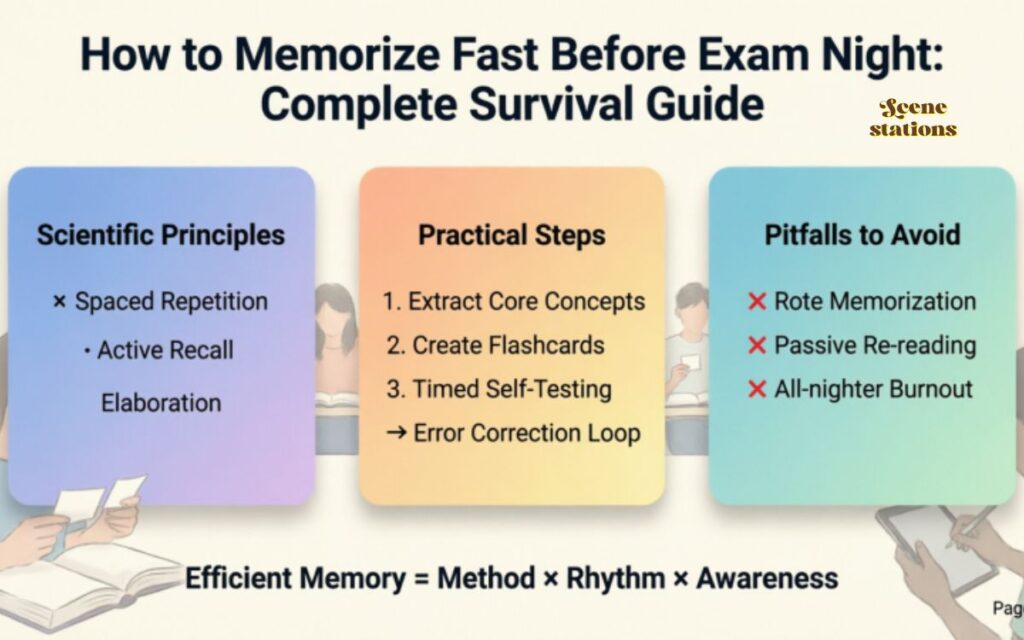
If exam day is coming up fast and you’re short on time, you can also check out this guide on how to memorize fast for exams for quick, last-minute techniques.
How Community Care Improved My Focus More Than Any App
This one surprised me the most, and it rarely appears in typical study-tip lists anywhere online. During a period when a lot of people around me were struggling, I started volunteering to help neighbors with small errands and maintenance tasks, and joined classmates in advocating for fair treatment of school service workers through group emails.
None of this was academic in any sense. But being useful to people outside my own four walls gave me a grounding sense of purpose that carried directly into my study sessions, quieting a lot of the restless, anxious energy that otherwise leaked into my concentration.
What I Actually Do When Nothing Works
Even with every habit above firmly in place, some days focus simply won’t come, and pretending otherwise would make this entire guide dishonest. Instead of forcing four hours of studying, I aim for one genuinely focused twenty-five-minute block, followed by real rest, not guilty scrolling disguised as a break.
Inconsistent focus isn’t a character flaw. It’s a normal, human reality, especially for students managing ADHD or high stress. Progress across weeks and months matters far more than perfection in any single afternoon.
Start Small Habits That Actually Last
Most people don’t fail at focus because they lack good tips; they fail because they try to apply ten new habits at once and burn out within a week. I started with just the dedicated study corner and the specific to-do list system, gave both a full two weeks before judging whether they worked, and only then layered in sound experimentation and movement breaks.
FAQs
Why is it harder to focus at home than at school or in an office?
Your brain associates home with rest and comfort, not work. Without a clear physical or mental boundary between the two, it takes extra effort to switch into focus mode — that’s environment, not laziness.
What’s the fastest way to improve focus during online classes?
Movement. A two-to-five-minute physical break the moment you notice yourself drifting resets attention faster than forcing yourself to keep staring at the screen.
Does background noise help or hurt concentration?
It depends on the person. Some people focus best in silence; others, including many with ADHD, concentrate better with steady background sound like a fan, instrumental music, or ambient noise.
How do I stop checking my phone while studying from home?
Close unnecessary tabs and apps before you start, put your phone in another room or on Do Not Disturb, and keep a specific, detailed to-do list so your brain has less room to wander toward distractions.
Is it normal to have days where nothing helps my focus?
Yes, completely. Even solid routines have off days. Aim for one short, genuinely focused block instead of a full session, rest properly afterward, and don’t treat one unfocused afternoon as a failure.
Final Thoughts
Staying focused while learning from home was never about one magic trick. It was about slowly reshaping my environment, my routines, and my expectations of myself — some changes took a full semester to build, others clicked within a single afternoon. If you’re frustrated with your own focus right now, that struggle doesn’t mean you’re behind or broken. It means you’re adjusting to a space that was never designed for deep concentration in the first place. Pick one small change from this list, give it real time, and be as patient with yourself as you’d be with a friend going through the exact same thing.

Ash Williom has spent years writing puns, wordplay, and internet slang guides for Scenestations.com, with a habit of testing every joke on real friends and family before it makes the list. When not chasing down the perfect one-liner, Ash is usually knee-deep in group chats collecting new material or digging into how internet slang actually spreads across platforms.