My cousin texted me “hy” one evening, out of nowhere, no context before it. I read “HY” as “hey” and casually replied, “Hey, what’s up?” Turns out, she was asking our group chat if she should book concert tickets.
was her answer — meaning hell yes. I looked like I’d ignored her question completely.
That mix-up is more common than people think. HY usually means either “Hell Yes” or a casual spelling of “Hi,” and which one you’re looking at depends entirely on where it shows up in the conversation. Get the context wrong, and you’ll reply to the wrong thing, exactly like I did.
This guide breaks down both meanings, shows you how to actually tell them apart in real chats, and covers every platform where HY shows up — Snapchat, Instagram, TikTok, WhatsApp, Discord, and group texts.
What Does HY Mean in Text?
HY carries two genuinely common meanings, and neither one is “rare.” The trick is reading what came before it.
Meaning 1: Hell Yes. This shows up as a reply to a question, invitation, or statement someone strongly agrees with. It’s a bigger, more excited version of a plain “yes.”
Meaning 2: Hi. This shows up as an opener — the first thing someone sends, usually with no question in front of it. It’s just a stylized, quicker way to type “hi,” similar to how people type “sup” instead of “what’s up.”
Here’s the difference side by side:
| Context | Likely Meaning | Example |
| Comes after a question or invite | Hell Yes | “Movie tonight?” → “HY!” |
| Comes as the first message | Hi | “HY, you around?” |
| Comes with an exclamation mark | Hell Yes | “HY!!” |
| Comes with a comma and more text | Hi | “HY, long time no talk” |
Where Did HY Actually Come From?
HY didn’t come from one single source — it grew out of two completely separate texting habits that happened to land on the same two letters.
The “Hell Yes” version follows the same shortening pattern as OMG, IDK, and TBH — people compress emotional phrases into fast-to-type letters when they’re excited and don’t want to slow down. The “Hi” version came from something simpler: keyboard shortcuts and typo habits, the same reason people type “u” instead of “you.” Somewhere along the way, both versions kept the same two letters, and now the internet has to figure out which one you meant every single time.
Texting culture has always done this — new phrases don’t usually replace old ones, they stack on top of them until context becomes the only thing separating one meaning from another. “HY” is a small, almost accidental example of that. Nobody sat down and decided two unrelated phrases should share the same abbreviation; it just happened because both phrases naturally shorten to the same two letters, and both stuck around long enough to become common at the same time. That’s also why you won’t find one single “official” origin story for HY the way you might for an acronym like LOL — it grew from two separate directions instead of one.
Does Region or Age Group Change How HY Is Used?
Yes, and this is something most guides skip entirely — but it’s exactly why my cousin and I read the same two letters so differently.
Younger texters, especially teens and users in their early twenties, lean heavily toward the “Hell Yes” meaning because it fits the fast, reaction-based way they use Snapchat, TikTok, and Discord. Older relatives, coworkers, and casual acquaintances are more likely to type “HY” as a quick, typo-style version of “Hi,” simply because that’s a habit that’s existed in texting long before “Hell Yes” got shortened this way. Regional texting habits play a role too — in some group chats, especially ones that mix generations, “HY” as a greeting is far more common because it’s the version everyone already understands without explanation.
If you don’t know the person’s texting habits yet, it helps to watch how they use it the first couple of times before assuming either meaning.
HY With Emojis and Repeated Letters (HYY, HYHY)
HY doesn’t always show up as just two letters — the way people stretch or repeat it changes the tone without changing the core meaning.
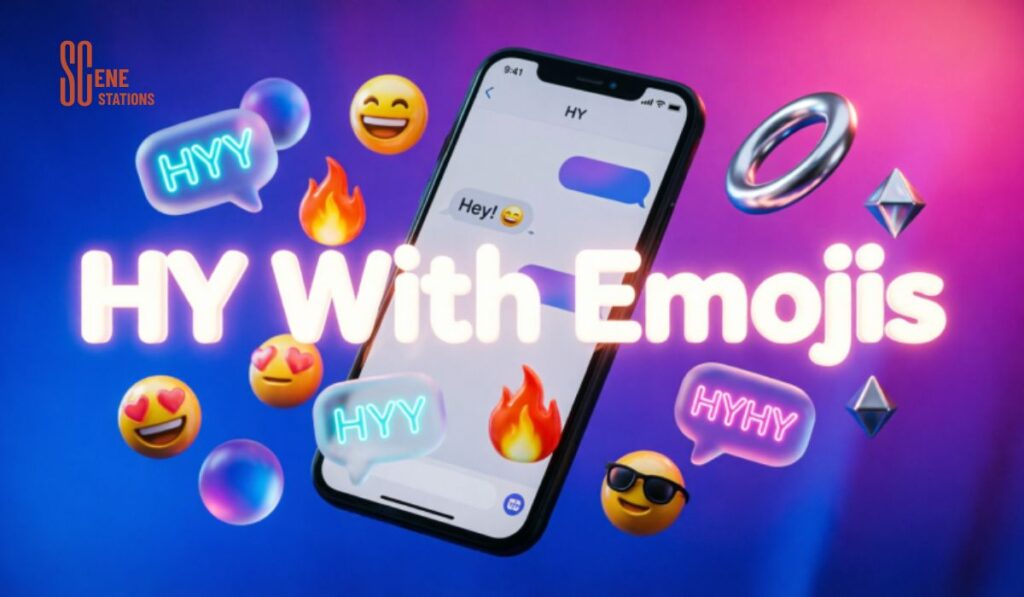
HYY usually means the same thing as HY but with more energy behind it, similar to typing “yess” instead of “yes.” HYHY (sometimes written “hy hy”) is a playful, doubled-up version used in an upbeat mood, most common as a greeting rather than agreement. Adding emojis changes the read even more — “HY 😊” after an invitation almost always softens into something closer to warm agreement, while “HY!!” with exclamation marks reads as pure excitement.
None of these variations change which of the two core meanings you’re dealing with. They just turn up the emotional volume on whichever one it already is.
HY Meaning on Snapchat
Snapchat conversations move fast, and HY usually shows up as a reaction to a Snap, a Story reply, or a quick response to plans — which almost always points to “Hell Yes.”
Example:
“Movie tonight?” “HY, already got popcorn.”
Because Snapchat replies are tied directly to whatever was just sent, context is easy to read here. If someone sends a Story about a trip and you reply “HY, looked amazing,” that’s clearly an agreement, not a greeting.
HY Meaning on Instagram
On Instagram, HY shows up in DMs, comments, and Story replies, and this is actually the platform where both meanings collide the most.
Example (Hell Yes):
“This trip looks incredible.” “HY, it was unreal.”
Example (Hi):
“HY, saw your post, love the colors”
Notice the comma after HY in the second one — that’s a strong signal you’re looking at a greeting, not agreement. Comments that open a conversation instead of reacting to one almost always mean “Hi.”
HY Meaning on TikTok
TikTok comment sections lean heavily toward the “Hell Yes” meaning because comments are reactions to a video, not conversation openers.
Example:
“We need a part 2!!” “HY 😭”
You’ll rarely see HY as a greeting in TikTok comments simply because comments don’t usually start conversations — they react to content. If you do see it as an opener, it’s more likely in the comment section of a creator’s Q&A or “ask me anything” video.
HY Meaning on WhatsApp
WhatsApp is where the “Hi” meaning shows up most, especially in first messages, family group chats, and conversations with people who aren’t deep into internet slang.
Example (Hi):
“HY, are you free to talk?”
Example (Hell Yes):
“Want to order burgers?” “HY!”
Because WhatsApp is used across a much wider age range than Snapchat or TikTok, older relatives and casual acquaintances are more likely to use HY as a shortcut for “Hi” rather than internet slang for agreement. If a message from your uncle starts with “HY,” he almost certainly means hello.
HY Meaning on Discord and Gaming Chats
In gaming chats, HY almost always means Hell Yes, since most messages during a match are quick reactions rather than greetings.
Example:
“Raid starts in 5.” “HY, let’s go.”
Gamers rarely open conversations mid-match, so context does most of the work here. If HY shows up right after a plan, invite, or question, it’s confirmation, not a hello.
How to Tell the Two Meanings Apart Fast
If you only remember one thing from this guide, remember this: HY as a reply means Hell Yes. HY as an opener means Hi.
Three quick checks that work almost every time:
- Was there a question right before it? → Hell Yes
- Is HY the very first word in the conversation? → Hi
- Is there punctuation after it, like a comma? → Hi
- Does it have an exclamation mark or use all caps? → Hell yes!
When none of these give you a clear answer, it’s fine to just ask. “Wait, do you mean hi or hell yes 😂” is a completely normal thing to send, and honestly it happens to everyone at some point.
Can HY Mean Something Else?
Occasionally, yes — though these show up far less often than the two main meanings.
| Meaning | Where You’ll See It |
| Hell Yes | Most common, used as a reply |
| Hi | Second most common, used as an opener |
| Happy Year | Rare, mostly around New Year’s |
| Initials | Someone’s name or username, depends entirely on the person |
If context genuinely gives you nothing to work with, default to whichever meaning fits the platform — Hell Yes on Snapchat, TikTok, and gaming chats; Hi on WhatsApp and first messages.
HY vs Similar Text Slang
Texting slang overlaps a lot, and it helps to see HY next to terms with the same letter-saving logic. Scenestations has a full breakdown if you want to go deeper — including GNG meaning in slang, which has its own three-way meaning split similar to HY.
| Abbreviation | Meaning | Tone |
| HY | Hell Yes / Hi | Excited or Casual |
| ILY | I Love You | Affectionate |
| SMH | Shaking My Head | Disappointed |
| BRB | Be Right Back | Neutral |
| AFK | Away From Keyboard | Neutral |
| FML | Frustration | Negative |
Abbreviations like GNG follow the same pattern as HY — short letters that only make sense once you know the context they showed up in.
Is HY Rude or Inappropriate?
Not really, but it depends on which meaning you’re using and who you’re talking to.
The “Hi” version is completely neutral — it’s just a shorter way to say hello. The “Hell Yes” version contains mild profanity, so while friends and family chats won’t blink at it, it can read as too casual in professional or formal settings.
Fine to use:
- With friends
- In family group chats
- In gaming or Discord chats
- On casual social media
Better to avoid:
- Work emails
- School assignments
- Messages to teachers, professors, or supervisors
- Customer service chats
A good rule of thumb: if you wouldn’t type out “hell yes” in full to that person, don’t shorten it to HY either. The abbreviation doesn’t soften the tone as much as people assume — it just makes it faster to type.
Is HY Flirty?
By itself, no. HY is neutral in tone — it’s the surrounding conversation that decides whether it feels flirty or not.
Example:
“Want to grab coffee sometime?” “HY 😊”
Here, the flirtation comes from the invitation and the emoji, not from the letters “HY” themselves. Send it as a reply to a plain scheduling question and it reads as plain agreement, nothing more.
When Should You Use HY?
HY works well anywhere you want a quick, energetic “yes” or a casual hello without overthinking the wording.
Good moments to use it:
- Accepting an invitation
- Agreeing with a friend’s idea
- Reacting to good news
- Opening a casual chat with someone you know well
When Should You Avoid HY?
Skip HY in situations where clarity and tone matter more than speed.
Better to avoid it when:
- Writing to clients or coworkers
- Messaging teachers or supervisors
- The other person might not recognize the abbreviation at all
- The conversation is already serious or sensitive
In those cases, “Yes,” “Absolutely,” or a full “Hi there” reads a lot more professional.
Common Mistakes People Make With HY
Assuming there’s only one meaning. This is the single biggest mistake, and it’s exactly what happened to me with my cousin — reading “HY” as “hi” when it was actually agreement, or the other way around.
Using it with someone who won’t recognize it. Older relatives, new coworkers, or anyone outside your usual group chat might just be confused instead of getting the intended tone.
Ignoring punctuation clues. A comma after HY almost always signals “Hi.” An exclamation mark almost always signals “Hell Yes.” Skipping past that small detail is how mix-ups happen.
How to Reply When Someone Sends HY
Your reply depends entirely on which meaning fits the conversation you’re already having.
If it’s Hell Yes:
Them: “HY!” You: “Let’s do it.”
If it’s Hi:
Them: “HY, you free later?” You: “Hey! Yeah, what’s up?”
If you’re genuinely unsure which one it means, a quick “Haha, wait—hi or hell yes?” can clear things up.
clears it up in one message without making things awkward.
A Few More Real Examples to Practice On
Once you start looking for the pattern, it becomes second nature — but a handful of extra examples make it stick faster than any rule ever could.
Example A (Hell Yes):
“Are we still doing game night Friday?” “HY, I already texted everyone.”
The question comes first, so this is agreement, not a greeting.
Example B (Hi):
“HY, been a while lol”
No question came before it, and the “lol” at the end fits a casual opener, not a reply.
Example C (Ambiguous, needs a follow-up):
“HY” — sent completely on its own, first thing in the day, no prior messages.
This is the one case where guessing is genuinely risky. Without any question before it and without extra punctuation or emojis to lean on, it could go either way. This is exactly the kind of message worth a quick “hii, what’s up 😊” so you don’t accidentally ignore an excited “yes” the way I did with my cousin.
Example D (Hell Yes, layered with excitement):
“They just announced the tour dates!!” “HYYY let’s get tickets”
The extra Y and the reaction to news both point to enthusiasm, not a greeting.
Reading a handful of examples side by side like this is honestly the fastest way to train your eye for it — after a while, you stop needing the rules at all and just feel which one fits.
Frequently Asked Questions
What does HY stand for in texting?
HY most commonly stands for either “Hell Yes,” used to show strong agreement, or a casual spelling of “Hi,” used as a greeting.
How do I know which meaning someone intended?
Check what came right before it. A question or invite before HY usually means Hell Yes. HY on its own with no prior message usually means Hi.
Is HY appropriate for work messages?
Generally no. Both versions read as informal, and the “Hell Yes” meaning contains mild profanity that doesn’t fit professional tone.
Is HY the same on every platform?
Not exactly. Snapchat, TikTok, and gaming chats lean toward “Hell Yes” since messages there react to something. WhatsApp and first messages lean toward “Hi.”
Can I just ask what someone meant?
Yes, and it’s genuinely the safest option when the message gives you nothing to go on. Most people won’t think twice about clarifying.
Does HYY or HYHY mean something different from HY?
Not really. They carry the same core meaning as HY but with more energy — HYY reads as an enthusiastic version of either “Hi” or “Hell Yes,” while HYHY is a playful, doubled-up greeting used in an upbeat mood.
Why do some people use HY as a greeting and others use it as agreement?
It comes down to habit and age group. Younger texters on Snapchat, TikTok, and Discord lean toward “Hell Yes” because their messages tend to react to something. Older texters and first-time messages on WhatsApp lean toward “Hi” out of a simpler typing habit.
Conclusion
HY isn’t a one-meaning abbreviation, and treating it like one is how mix-ups like mine happen. Read it as a reply to something, and it’s almost certainly “Hell Yes.” Read it as the opening message, and it’s almost certainly “Hi.” Once you get used to checking what came before it, you’ll never send the wrong reply again and honestly, internet slang keeps shifting fast enough that terms like “6 7” prove context is always going to matter more than the letters themselves.
When in doubt, look at what came before the message. Context, every time, tells you which HY you’re dealing with.

Ash Williom has spent years writing puns, wordplay, and internet slang guides for Scenestations.com, with a habit of testing every joke on real friends and family before it makes the list. When not chasing down the perfect one-liner, Ash is usually knee-deep in group chats collecting new material or digging into how internet slang actually spreads across platforms.