If you’ve ever scrolled through TikTok, opened a WhatsApp chat, or listened to a trending Arabic pop song, chances are you’ve come across the word “habibi.” It shows up everywhere these days, and that’s exactly why so many people stop and ask what it actually means.
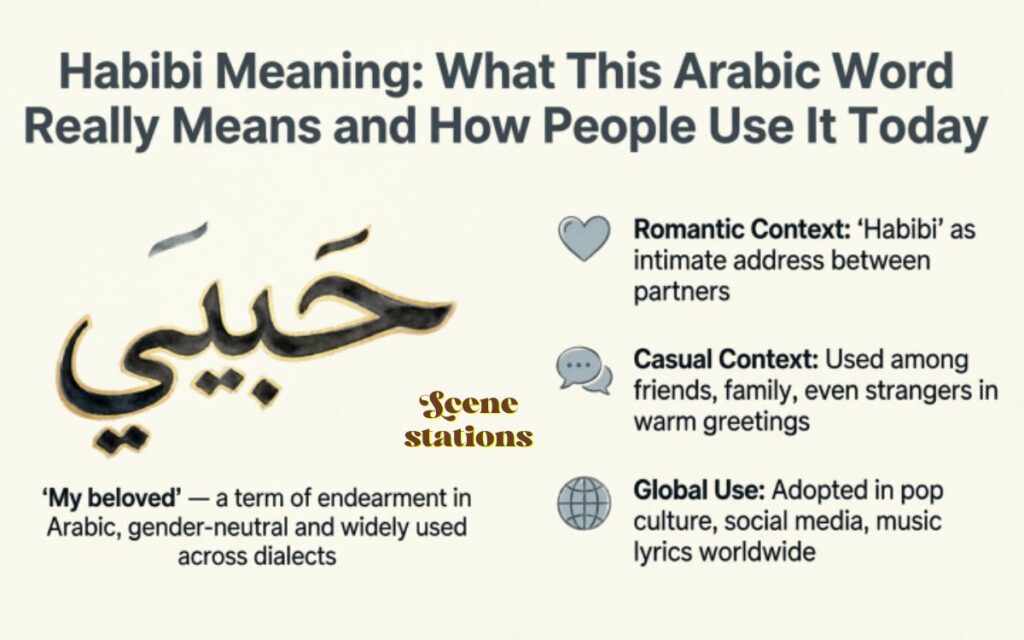
The short answer is that habibi is an Arabic word that means “my love,” “my dear,” or “my beloved.” But the real story is a little more interesting than that. This word carries different weight depending on who says it, where they say it, and the relationship between the two people talking. Sometimes it’s romantic. Sometimes it’s just a warm way of saying “buddy.” This guide breaks down everything you need to know about habibi, from its Arabic roots to how Gen-Z uses it online today.
What Does Habibi Actually Mean?
Before getting into culture and trends, it helps to understand exactly what this word translates to. Habibi has one core meaning, but it stretches across several English equivalents depending on context.
At its simplest, habibi means:
- My love
- My dear
- My beloved
- Sweetheart
- Darling
- Buddy or bro (in casual use)
The word breaks down into two parts. “Habib” comes from the Arabic root that means beloved or loved one, and the “-i” ending means “my.” So literally, habibi translates to “my beloved.” It’s one word doing the job of an entire sentence.
Where Does the Word Habibi Come From?
Every word has a history, and habibi’s history goes back much further than social media. Understanding where it comes from also explains why it feels so warm no matter who uses it.
The word traces back to the Arabic root ḥ-b-b (حب), which relates to love, affection, and closeness. From this same root, Arabic gives us several related words:
- Hubb – meaning love
- Mahabba – meaning affection or fondness
- Habib – meaning a beloved person
- Habibi – meaning “my beloved” (used for males)
- Habibti – meaning “my beloved” (used for female)
For generations, Arabic speakers have used this word among couples, parents and children, siblings, and close friends. A mother calling her son habibi is completely normal. A husband calling his wife habibti is equally common. It has always been a flexible word that carries warmth rather than one fixed meaning.
Habibi vs Habibti: What’s the Real Difference?
One of the most common points of confusion is whether habibi and habibti are interchangeable. They aren’t, and knowing the difference actually matters if you want to use the word correctly.
The difference comes down to grammatical gender, not intensity of feeling:
- Habibi is the masculine form, used when speaking to or about a man or boy
- Habibti is the feminine form, used when speaking to or about a woman or girl
Both mean exactly the same thing emotionally. Neither one is “more affectionate” than the other. That said, in some casual dialects, especially in parts of Egypt, people sometimes use “habibi” for both genders in relaxed conversation. It’s not grammatically correct, but it happens often enough that you’ll hear it.
How Do You Pronounce Habibi?
Getting the pronunciation right helps you sound natural if you plan to actually use the word in conversation, not just read it online.
Habibi is pronounced: ha-BEE-bee
Break it down like this:
- “Ha” – short, like the start of “hat”
- “BEE” – the stressed syllable, sounds like the letter B followed by “ee”
- “bee” – same sound repeated, softer
The stress falls on the middle syllable. Native speakers say it quickly and smoothly, almost like one flowing sound rather than three separate parts. Habibti follows the same rhythm: ha-BEEB-tee.
Other Arabic Terms of Endearment You Should Know
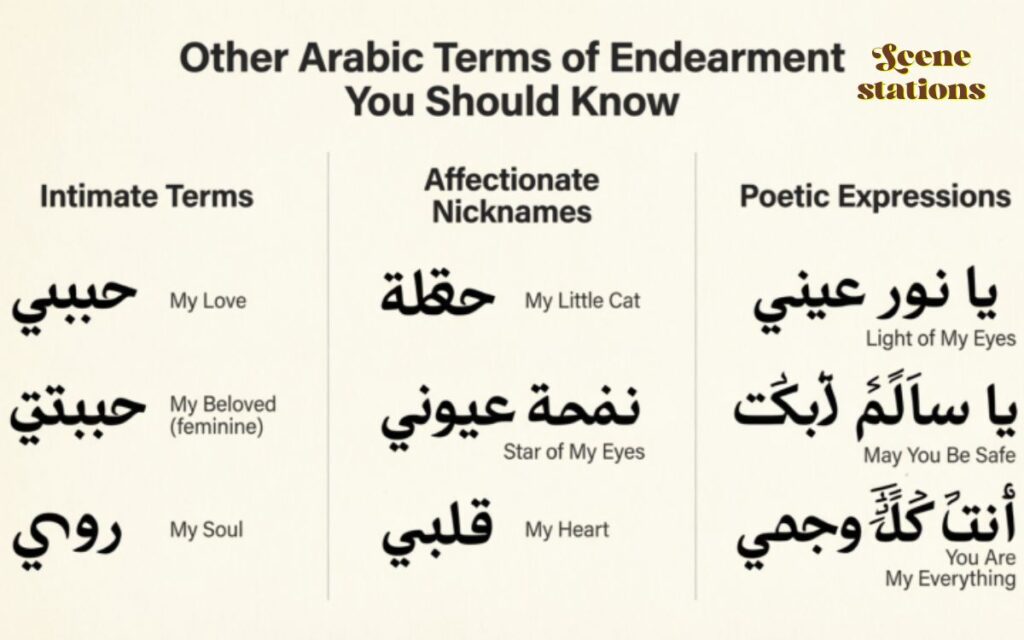
Habibi isn’t the only word Arabic speakers use to express affection. If you’re learning the culture around this word, it helps to know its close relatives too.
- Hayati (حياتي) – means “my life,” used between romantic partners
- Omri (عمري) – also means “my life,” carrying deep emotional weight
- Ya qalbi (يا قلبي) – means “my heart,” used for both men and women
- Ya rouhi (يا روحي) – means “my soul,” a very tender expression
- Ya eyni (يا عيني) – literally means “my eye,” used as a compliment since eyes are seen as precious in Arab culture
None of these replace habibi, but they show how rich Arabic is when it comes to expressing love and closeness. People often mix these words in the same conversation depending on the mood.
How Habibi Is Used in Everyday Conversations
Context changes everything with this word. The exact same sentence can feel romantic, friendly, or even funny depending on the setting it appears in.
In text messages, it usually sounds warm and casual:
- “Good morning, habibi.”
- “Drive safe, habibi.”
Among friends, it often just means “buddy” or “bro”:
- “Habibi, you owe me coffee.”
- “Relax, habibi, it’s fine.”
In hospitality settings, shopkeepers or hosts sometimes use it to sound welcoming:
- “Welcome, habibi.”
This isn’t flirtation. It’s simply a cultural habit of using warm language with strangers, especially in parts of the Middle East where hospitality is a big deal.
Habibi Across Social Media Platforms
The word behaves a little differently depending on which app you see it on. Knowing the platform helps you read the tone correctly.
WhatsApp – Usually personal and direct, often used between close friends, family, or partners. Example: “Sleep well, habibi.”
Instagram – Frequently shows up in captions for couples, travel photos, or aesthetic posts. Sometimes people use it simply because it sounds stylish, not because there’s a romantic meaning behind it.
TikTok – This is where habibi became a meme. Videos joking about “come to Dubai, habibi” turned it into an internet punchline, often said in an exaggerated accent for comedic effect.
Snapchat – Tends to lean flirty, appearing in private, playful conversations between people who are into each other.
Habibi in Music and Pop Culture
Music is one of the biggest reasons this word spread far beyond Arabic-speaking countries. Understanding its role in songs and film explains why so many non-Arabic speakers recognize it instantly.
Habibi has appeared as a song title, an album name, and a recurring word across Arabic pop, Khaleeji music, and crossover hits that blend Arabic and Western sounds. Because Arab music has such a huge global streaming audience today, casual listeners pick up the word even without knowing Arabic, simply from hearing it repeated in catchy choruses. Movies and TV shows featuring Middle Eastern characters or settings have added to this exposure too, using the word to signal warmth or cultural authenticity on screen.
This is also why the word carries a certain “vibe” online — it feels romantic and rhythmic even to people who’ve never studied a single word of Arabic.
Common Misconceptions About Habibi
A lot of people assume things about this word that simply aren’t true. Clearing these up helps you understand it the way it’s actually used, not the way it’s often misread online.
Misconception 1: It always means romantic love.
Not true. Friends, coworkers, and family members use it just as often, without any romantic meaning at all.
Misconception 2: Only men use it for women romantically.
Also false. Parents call their children habibi. Friends of the same gender call each other habibi. Even shopkeepers use it with customers.
Misconception 3: Habibi and habibti are the same word.
They’re not — one is masculine, one is feminine, as covered earlier.
Misconception 4: It’s only used by Arabic speakers.
Wrong. The word has spread globally through music, film, and social media, and now shows up in conversations far outside Arabic-speaking communities.
Misconception 5: Non-Arabs using it is always disrespectful.
This depends entirely on context and intent. Respectful, casual use is very different from mocking someone’s accent or culture.
Habibi in Dating and on Dating Apps
Dating culture has picked up this word in its own particular way, and it’s worth understanding how it lands in a romantic context specifically.
On dating apps, habibi is often used to:
- Signal warmth quickly
- Sound playful or flirty
- Create instant chemistry in a conversation
- Reference Arab or Middle Eastern culture and identity
You’ll see it in bios like “looking for my habibi” or in opening messages meant to feel personal rather than generic. In actual dating chats, it can function as a pet name, a flirty opener, or simply a sign of growing closeness between two people.
One word of caution: using it too early in a conversation, before there’s any real connection, can come across as forced or overly familiar. It works best once some rapport has already been built.
How to Reply When Someone Calls You Habibi
If someone uses this word with you, your reply really depends on your relationship with them and the tone of the conversation.
Friendly reply:
- “Thanks, habibi!”
- “Haha okay, habibi.”
Flirty reply:
- “Missed you too, habibi.”
Playful reply:
- “Yes habibi boss.”
Quick chat example:
Person: “Goodnight habibi 🌙”
You: “Sleep well, habibi 💛”
There’s no single “correct” response. Matching their tone is usually the safest approach.
Habibi vs Other Terms of Endearment
Comparing habibi to similar words in other languages shows just how universal the idea of a “pet name” really is, even though every culture expresses it a little differently.
| Word | Meaning | Tone | Language |
| Habibi | My beloved | Warm | Arabic |
| Habibti | My beloved (female) | Warm | Arabic |
| Darling | Beloved | Romantic | English |
| Bro | Friend | Casual | English slang |
| Amore | Love | Romantic | Italian |
| Mi Amor | My love | Romantic | Spanish |
| Jaan/Jaanu | My life | Romantic | Urdu/Hindi |
What makes habibi stand out is its flexibility — it swings between romantic and platonic more easily than most of these other words.
What Does “Yalla Habibi” Mean?
This phrase shows up constantly in memes and songs, so it deserves its own explanation separate from habibi alone.
“Yalla” means “come on” or “let’s go” in Arabic. Combine it with habibi, and “yalla habibi” roughly translates to “come on, my dear” or “let’s go, my love.” It’s often used to encourage someone to hurry up, join in, or get moving, wrapped in an affectionate tone. You’ll hear it in casual conversation, in songs, and in the viral “come to Dubai, habibi” meme format that took over TikTok.
Habaibi: The Plural Form of Habibi
Most people only ever learn the singular form, but Arabic has a plural version too, and it’s worth knowing if you want a fuller picture of the word.
Habaibi (حبايبي) is the plural form, meaning “my beloved ones” or “my dears.” It’s used when addressing a group of people you care about, regardless of gender. You might hear someone greet a group of friends with “hi habaibi” the same way you’d say “hey everyone” or “hey guys” in English, just with extra warmth built in.
Is It Okay for Non-Arabs to Use Habibi?
This question comes up a lot, especially as the word spreads further into global internet culture. The honest answer requires a bit of nuance rather than a flat yes or no.
Using habibi respectfully, in a warm or friendly way, is generally seen as fine, even by non-Arabic speakers. Arab culture has always embraced the word being used with hospitality and kindness. The line gets crossed when the word is used to mock an accent, reduce a culture to a punchline, or used in a way that feels disrespectful rather than affectionate. Context and intent matter far more than whether the speaker happens to be Arab or not.
Why Is Habibi Trending Online Right Now?
This word has been around for centuries, so it’s worth understanding why search interest has spiked so heavily in recent years specifically.
A few factors are driving this:
- Viral TikTok sounds and meme formats
- Arabic and Khaleeji pop songs going global on streaming platforms
- Increased use of the word in dating app bios and messages
- Growing Arab influence in global social media culture
- Viral catchphrases like “come to Dubai, habibi”
Many people today encounter the word online first, then later learn its actual meaning and origin, which is exactly why searches for “habibi meaning” keep climbing.
Frequently Asked Questions
What does habibi mean in English?
It translates to “my love,” “my dear,” or “my beloved,” and can also mean “buddy” in casual use.
Does habibi mean boyfriend?
Not necessarily. It can refer to a boyfriend, but also a friend, family member, or anyone you feel close to.
Is habibi always romantic?
No. It depends entirely on context it’s used romantically, platonically, and even jokingly.
Can a girl say habibi?
Yes, though she would be more commonly used when referring to herself in the feminine form.
What does “al habibi” mean?
“Al” simply means “the” in Arabic, so “al habibi” translates to “the beloved.” It’s used more in poetry and formal expressions than everyday chat.
Is calling someone habibi considered flirting?
It can be, but it’s just as often completely platonic, especially among friends and family.
Why do people say “come to Dubai, habibi”?
It started as a viral internet joke and meme phrase, not a literal invitation.
Is habibi used in religious or formal Arabic?
It can appear in poetry and traditional expressions, but it’s mainly a conversational, everyday word rather than a formal or religious term.
Conclusion
Habibi is one of those rare words that manages to carry deep emotional weight while staying completely flexible. It means “my beloved” at its root, but in real life, it stretches to cover love, friendship, family warmth, and even playful humor, all depending on who’s saying it and why.
That flexibility is exactly why it has traveled so far beyond Arabic-speaking communities, showing up in songs, memes, dating app bios, and everyday chats around the world. If someone calls you habibi, there’s a good chance they simply mean it kindly, whether that’s romantic, friendly, or just a warm way of saying hello.
See Other Posts Of Meaning

Ash Williom has spent years writing puns, wordplay, and internet slang guides for Scenestations.com, with a habit of testing every joke on real friends and family before it makes the list. When not chasing down the perfect one-liner, Ash is usually knee-deep in group chats collecting new material or digging into how internet slang actually spreads across platforms.